
The Global Chip War: Why Advanced Semiconductors Are Becoming More Valuable Than Ever
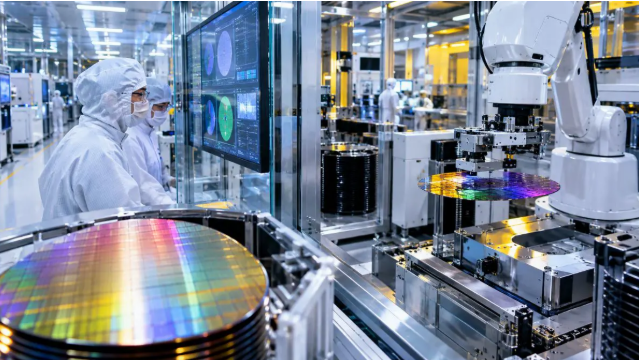
Semiconductors have become one of the most strategically important products in the global economy. They power smartphones, cars, cloud services, medical equipment, industrial machinery and the artificial intelligence systems now attracting enormous investment. Yet the most advanced chips are difficult to design, manufacture and package, and only a small number of companies and economies control the most critical parts of that process.
That concentration has turned the semiconductor industry into a major arena of geopolitical competition. The United States is tightening controls on access to advanced computing technology, China is accelerating its drive for technological self-reliance, Taiwan remains central to leading-edge manufacturing, and suppliers in Europe, Japan and South Korea hold indispensable capabilities. The result is a global chip war in which commercial competition, national security and supply-chain resilience are increasingly inseparable.
The stakes are rising as demand for artificial intelligence accelerators, high-bandwidth memory and advanced packaging expands. Chips are no longer simply components inside electronic products. They are strategic infrastructure—and the ability to secure them can influence economic growth, military capabilities and technological leadership.
Why advanced semiconductors matter more than ever
All semiconductors are not equal. Mature-node chips, often produced using older manufacturing processes, remain essential for vehicles, appliances, power systems and industrial equipment. Advanced logic chips, by contrast, are designed to deliver more computing performance while improving energy efficiency. They are especially important for training and running sophisticated AI models, high-performance computing and other data-intensive applications.
Manufacturing progress is measured partly in nanometres, a label associated with successive generations of chip technology. Smaller process nodes can enable denser and more efficient designs, although real-world performance also depends on architecture, materials, power delivery, memory and software. The most capable AI systems also rely on high-bandwidth memory (HBM) and advanced packaging, which bring processors and memory closer together to move large volumes of data quickly.
This is why a shortage or restriction involving one part of the supply chain can have consequences far beyond a single factory. A company may design a powerful processor but still depend on specialist foundries, lithography equipment, memory suppliers, packaging capacity and software tools to turn that design into a usable product.

boulevardbarandgrille.com
The United States and China: technology competition becomes policy
Washington views advanced semiconductors as a national-security priority because high-end computing can support artificial intelligence, advanced weapons development and sensitive research. Export controls have therefore sought to limit China’s access to certain advanced chips, manufacturing equipment and related technologies. The policy is intended to slow the transfer of capabilities that US officials consider strategically sensitive, while preserving advantages held by the United States and its partners.
The rules are evolving. On November 19, 2026, new US Commerce Department regulations addressed remote access to advanced semiconductor computing through overseas data centres and changed compliance requirements affecting advanced logic-chip fabrication and packaging. The rules also added licensing requirements for certain advanced semiconductor exports to a number of destinations considered at higher risk of diversion. The changes underline that controls are no longer focused only on the physical shipment of a chip; regulators are also examining who ultimately owns, accesses and benefits from computing capacity.
For manufacturers and chip designers, this creates a more complicated compliance environment. Foundries must understand customers’ ownership structures, locations, packaging partners and shipping arrangements. The objective is to prevent restricted technology from reaching prohibited end users through intermediaries or overseas subsidiaries. But the broader reach of controls can also increase costs, delay orders and complicate decisions for companies operating across several countries.
China, meanwhile, has pursued semiconductor self-sufficiency for years, and restrictions have added urgency to that effort. Chinese companies are investing in domestic chip design, fabrication, memory, equipment and materials. Progress has been uneven: China has expanded capabilities in several parts of the ecosystem, but the most advanced logic manufacturing, high-end lithography, memory and parts of the software stack remain difficult bottlenecks.
Taiwan’s central role in the supply chain
Taiwan is at the centre of the chip debate because Taiwan Semiconductor Manufacturing Company (TSMC) is the world’s leading contract chipmaker and a critical producer of advanced processors. Many major technology companies design chips but outsource manufacturing to specialist foundries. This model allows designers to focus on architecture and software while relying on foundries that invest billions of dollars in factories, equipment and process research.
The concentration of advanced production in Taiwan creates a strategic vulnerability. Any major disruption—whether caused by geopolitical tension, a natural disaster, an energy shortage or a logistics interruption—could affect global technology supply. Governments and companies have therefore sought to diversify manufacturing, but building a competitive semiconductor ecosystem takes years. It requires experienced engineers, reliable utilities, specialist suppliers, research institutions and customers willing to commit large volumes.
Recent US rule changes also illustrate how Taiwan’s manufacturing position intersects with Washington’s export-control policy. Reuters reported in November that TSMC was tightening restrictions on some Chinese chip designers, pausing affected orders at advanced process nodes unless the customers obtained the required US approvals. The episode shows how a regulatory decision made in Washington can influence production decisions at a major foundry in Taiwan.
ASML, lithography and the equipment bottleneck
Semiconductor manufacturing depends on an international network of highly specialised equipment makers. One of the most important is ASML, the Netherlands-based company that supplies extreme ultraviolet (EUV) lithography systems used to produce the smallest and most complex chip features at scale. These machines are extraordinarily sophisticated, combining precision optics, light sources, software and tightly controlled manufacturing processes.
Because only a limited number of suppliers can provide critical tools, equipment access has become a key pressure point in the chip war. US, Dutch and Japanese policies have restricted or conditioned exports of certain advanced manufacturing technologies to China. Such controls can make it harder for Chinese manufacturers to reproduce the most advanced production capabilities, even when they have access to capital and engineering talent.
However, restrictions do not automatically stop technological progress. They can encourage domestic substitution, alternative manufacturing methods and investment in less advanced but commercially useful chips. China can also compete in mature-node production, where global demand remains substantial. The strategic question is not simply whether a country can copy the most advanced process, but whether it can build a sustainable industry across enough layers of the supply chain.

AI demand is intensifying the race
The rapid expansion of AI has increased the strategic value of advanced chips. Training large models and operating AI services require powerful accelerators, fast memory, high-speed networking and data centres capable of supplying enormous amounts of electricity and cooling. Demand is therefore spreading beyond the processor itself to include HBM, advanced packaging, substrates, networking components and manufacturing capacity.
This demand benefits leading chip designers and foundries, but it also creates bottlenecks. Expanding a fabrication plant is expensive and technically difficult, while advanced packaging capacity and high-bandwidth memory production cannot be increased overnight. Even companies with strong chip designs may face constraints if a key supplier cannot deliver enough components.
The AI boom also changes the economics of semiconductor leadership. Access to leading-edge chips can help companies develop more capable models and services, while large-scale AI deployment can generate further demand for computing infrastructure. This feedback loop encourages governments to treat semiconductor access as a long-term competitive advantage rather than an ordinary procurement issue.

Rare earths and the less visible supply-chain risks
The chip war is not limited to processors and lithography machines. Semiconductor production relies on specialised chemicals, gases, wafers, precision components and materials that may come from a small number of suppliers. Some equipment also uses rare-earth magnets and other materials that are difficult to replace quickly.
China’s position in the processing of several critical minerals gives it leverage in parts of the wider technology supply chain. In October 2026, Reuters reported that TSMC was exploring alternatives to rare-earth components in factory equipment amid concern that export restrictions could disrupt supplies. The effort was described as being at an early stage, but it highlights a vulnerability that is easy to overlook: even a highly advanced chip factory can depend on seemingly ordinary components sourced from concentrated markets.
For manufacturers, resilience increasingly means mapping suppliers several tiers beyond direct vendors, identifying substitute materials and holding strategic inventories. Diversification can reduce exposure to disruption, but it may raise costs and take years to implement. The challenge is to build a supply chain that is secure without making the industry so fragmented that innovation and economies of scale suffer.
Can the world reduce its dependence on a few chipmaking hubs?
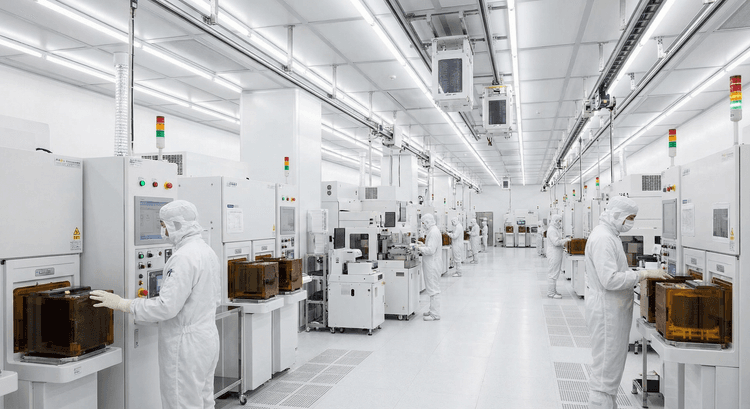
The United States, Europe, Japan, South Korea and India are all pursuing policies to strengthen domestic or regional semiconductor capabilities. New factories and public incentives can improve geographic diversity, support skilled employment and reduce dependence on a narrow set of production locations. Yet a factory announcement is only the beginning. A competitive operation must reach high yields, attract customers, secure equipment and materials, and retain highly trained workers.
There is also a risk that national industrial strategies duplicate expensive capacity or create conflicting rules. Semiconductor companies operate globally because no single country controls every stage of the process. A more resilient system will likely require cooperation among allies, predictable trade rules and practical mechanisms for responding to shortages.
What the chip war means for businesses and consumers
For technology companies, the immediate effects include greater compliance costs, uncertainty over where products can be manufactured and sold, and pressure to qualify alternative suppliers. Car manufacturers, electronics producers and cloud-service providers may also face higher prices or longer lead times if restrictions or geopolitical shocks disrupt supply.
Consumers may not notice export-control rules directly, but they can feel the consequences through device prices, product availability and the pace of innovation. At the same time, investment in new factories and research can create jobs and strengthen local technology industries. The overall effect will depend on whether governments can balance security objectives with the benefits of an interconnected global market.
The future of the global semiconductor race
The global chip war is unlikely to be decided by a single breakthrough or one country’s control of a single company. Leadership depends on a broad ecosystem: chip architecture, manufacturing processes, lithography, memory, packaging, materials, software, talent and reliable energy. Strength in one layer cannot fully compensate for weaknesses in every other layer.
In the years ahead, advanced semiconductors will remain valuable because they sit at the intersection of artificial intelligence, industrial productivity, communications and national security. The countries that succeed will be those that combine sustained research and investment with dependable international partnerships. Attempts to secure supply chains are understandable, but excessive fragmentation could slow innovation and make critical technology more expensive for everyone.
The central contest is therefore not simply about who can manufacture the smallest chip. It is about who can build, protect and scale the complete ecosystem that turns advanced semiconductor technology into economic and strategic power.
Next Article
–Solid-State Battery Breakthroughs Could Reshape the Future of Electric Vehicles
–The Global Semiconductor Race Intensifies as AI Demand Continues to Grow
–AI-Powered Cyberattacks Are Becoming More Dangerous: Is the Digital World Ready?